When we overly rely on AI for our creative work, we create something called “cognitive debt.” In other words, the more we let AI do our thinking, the less we exercise our own creative muscles.

June 4, 2025
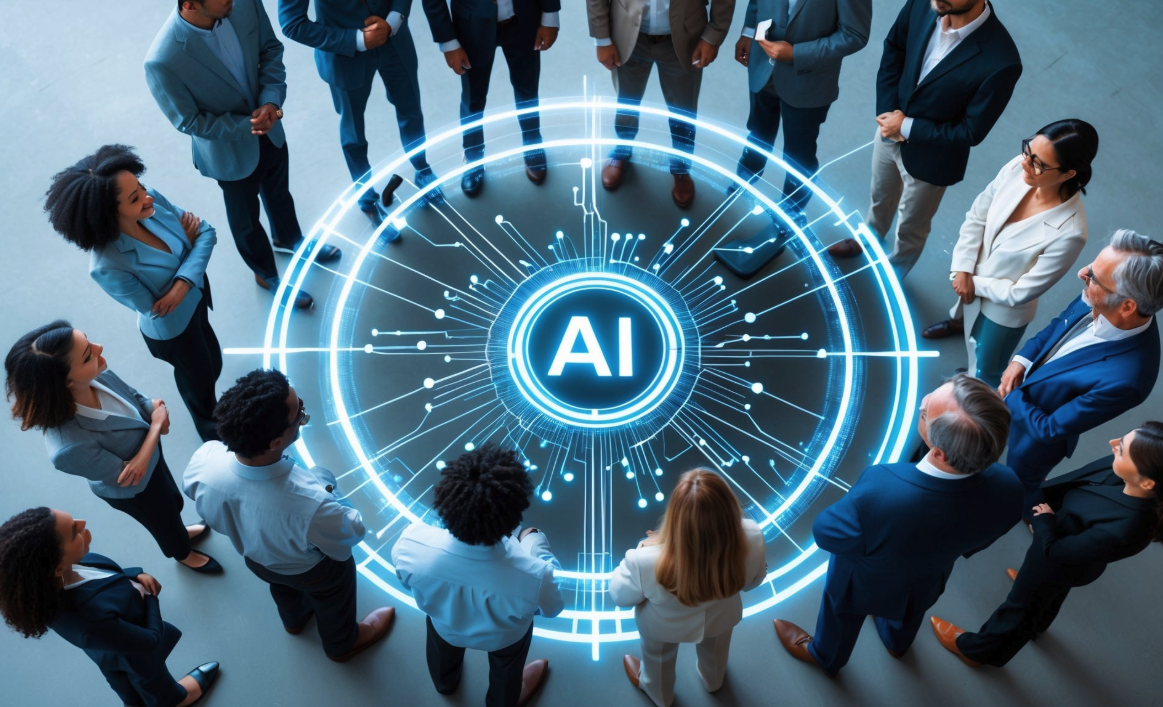
A recent MIT study surfaced an uncomfortable insight: when people rely too heavily on AI for creative work, they accumulate what researchers call cognitive debt. The more thinking we outsource, the less we exercise our own creative and critical muscles.
This finding has reignited familiar debates. Some argue AI is inherently damaging. Others worry about intellectual property, ethics, or data misuse. These concerns matter, but they tend to orbit around the technology itself.
What often gets missed is a more practical question: how people actually use AI in their daily work.
In practice, the strongest performers don’t stop thinking when AI enters the picture. They think more deliberately.
They question outputs. They explore alternatives. They use AI to expand possibilities, not to shortcut judgment. In these cases, AI acts as a catalyst for better ideas, not a replacement for human reasoning.
Creative ability doesn’t disappear because AI exists. It weakens when people stop engaging deeply with the work.
From the beginning at illumi, we’ve held a simple view: AI should amplify human capability, not stand in for it.
A useful metaphor is Tony Stark’s suit. The suit enhances what Tony can do, but without Tony inside, it’s just machinery. The intelligence, creativity, and judgment still come from the human.
This idea shapes how we think about tools. Human knowledge, insight, and intent come first. AI enters later, as an enhancement layer that builds on what people have already created and understood.
In a world saturated with technology, the ability to capture, organize, and build on human insight has become more valuable, not less.
Our brains remain the source of meaning, originality, and direction. AI can accelerate work, but it cannot define what matters. That responsibility stays human.
History reinforces this point. The most significant achievements were never the result of a single mind working alone. Progress has always emerged from groups of people combining perspectives, challenging assumptions, and learning together.
That is why collaboration matters so deeply in the AI era. When people share knowledge, experiment openly, and build collectively, AI becomes a powerful partner rather than a crutch.
At illumi, we focus on making it easy to gather human thinking, preserve context, and celebrate collective intelligence. Only after that foundation exists does AI step in to support and extend it.
Sustainable innovation depends on people first. AI works best when it supports how humans already think, learn, and collaborate.
Q: What is cognitive debt in the context of AI?
A: Cognitive debt refers to the gradual loss of critical and creative thinking skills when people consistently rely on AI to do the thinking for them instead of engaging deeply with the work themselves.
Q: Does using AI reduce creativity?
A: AI does not reduce creativity on its own. Creativity declines when people stop questioning, exploring, and making decisions. Used thoughtfully, AI can expand creative possibilities rather than limit them.
Q: How do high performers use AI differently?
A: High performers use AI as a starting point, not an endpoint. They challenge outputs, test alternatives, and combine AI assistance with their own judgment and domain knowledge.
Q: Why is human knowledge still essential in the AI era?
A: Human knowledge provides context, values, and meaning. AI can process and generate content, but humans determine relevance, direction, and impact.
Q: What role does collaboration play in effective AI use?
A: Collaboration allows teams to share insights, learn from each other’s experiments, and build on collective understanding. AI delivers the most value when it supports shared knowledge rather than isolated use.
Q: How should teams think about AI adoption going forward?
A: Teams should focus on strengthening human thinking and collaboration first, then apply AI as an enhancement layer that accelerates learning and execution without replacing judgment.

illumi Inc. © 2026
